
In today’s fast-paced world, stress has become a common part of daily life. Whether it’s work deadlines, family responsibilities, financial concerns, or the constant flow of information from digital devices, stress can affect both our physical and mental well-being.
Fortunately, meditation offers a simple and effective way to manage stress and create a greater sense of calm and balance.
If you’re new to meditation, this beginner’s guide will help you understand what meditation is, how it reduces stress, and how you can start practicing it today.
What Is Meditation?
Meditation is a practice that involves focusing your attention and becoming more aware of the present moment. Rather than trying to stop your thoughts completely, meditation teaches you to observe them without judgment.
For thousands of years, meditation has been used to promote relaxation, mental clarity, and emotional well-being. Today, scientific research continues to show that regular meditation can significantly reduce stress and improve overall health.
How Meditation Helps Relieve Stress
When we experience stress, our bodies activate the “fight-or-flight” response. This can lead to increased heart rate, muscle tension, anxiety, and difficulty concentrating.
Meditation helps counteract this response by activating the body’s relaxation system. Regular practice can:
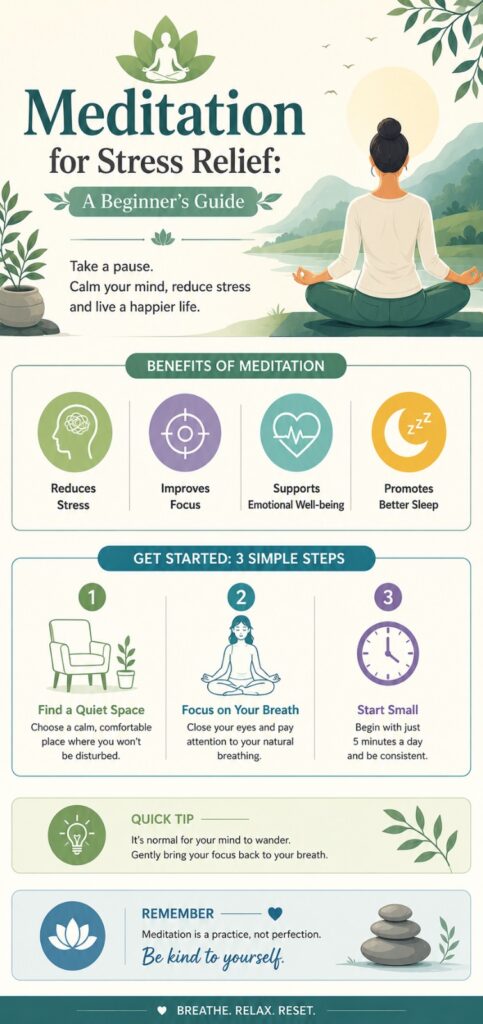
Reduce Anxiety and Worry
Meditation encourages you to focus on the present moment instead of dwelling on past events or future concerns.
Lower Cortisol Levels
Studies suggest that meditation can help reduce cortisol, the primary stress hormone associated with chronic stress.
Improve Emotional Regulation
Meditation helps you respond more calmly to challenging situations rather than reacting impulsively.
Enhance Focus and Clarity
A calmer mind makes it easier to concentrate and make thoughtful decisions.
Promote Better Sleep
Many people find that meditation helps quiet racing thoughts and improves sleep quality.
Types of Meditation for Beginners
1. Mindfulness Meditation
Mindfulness meditation involves paying attention to your thoughts, feelings, and surroundings without judgment. It’s one of the easiest forms of meditation for beginners.
2. Breathing Meditation
This practice focuses on your breath. By concentrating on each inhale and exhale, you naturally calm your nervous system.
3. Guided Meditation
Guided meditation involves listening to an instructor or audio recording that leads you through a relaxation exercise.
4. Body Scan Meditation
A body scan encourages you to focus on different parts of your body and release tension from head to toe.
5. Loving-Kindness Meditation
This technique involves sending positive thoughts and well wishes to yourself and others, helping cultivate compassion and emotional balance.
How to Start Meditating
Starting meditation doesn’t require special equipment or extensive training. Follow these simple steps:
1. Find a Quiet Space
Choose a calm environment where you won’t be interrupted for a few minutes.
2. Sit Comfortably
Sit in a chair, on a cushion, or on the floor. Keep your back straight but relaxed.
3. Focus on Your Breath
Close your eyes and pay attention to your breathing. Notice the sensation of air entering and leaving your body.
4. Observe Your Thoughts
Thoughts will naturally arise. Instead of fighting them, acknowledge them and gently return your attention to your breath.
5. Start Small
Begin with just 5–10 minutes per day. As you become more comfortable, gradually increase your meditation time.
A Simple 5-Minute Meditation Practice
Try this quick meditation whenever you feel stressed:
Sit comfortably and close your eyes.
Take three slow, deep breaths.
Focus on the natural rhythm of your breathing.
Notice any thoughts without engaging with them.
If your mind wanders, gently bring your attention back to your breath.
Continue for five minutes.
Open your eyes and take a moment to notice how you feel.
Common Challenges for Beginners
“I Can’t Stop Thinking”
This is completely normal. Meditation isn’t about eliminating thoughts—it’s about becoming aware of them.
“I Don’t Have Enough Time”
Even a few minutes of meditation each day can make a difference.
“I’m Not Doing It Right”
There is no perfect meditation session. Consistency matters more than perfection.
“I Get Distracted Easily”
Distractions are part of the process. Each time you return your focus, you’re strengthening your mindfulness skills.
Benefits of Regular Meditation
With consistent practice, meditation can provide long-term benefits such as:
Reduced stress and anxiety
Improved concentration
Better emotional health
Increased self-awareness
Enhanced sleep quality
Lower blood pressure
Greater sense of inner peace
The key is consistency. Small daily sessions often produce better results than occasional long sessions.
Conclusion
Meditation is one of the most accessible and effective tools for stress relief. You don’t need special skills, expensive equipment, or hours of free time to experience its benefits.
By dedicating just a few minutes each day to mindful breathing and present-moment awareness, you can reduce stress, improve focus, and cultivate a calmer, healthier mindset.
Start small, stay consistent, and allow meditation to become a simple yet powerful part of your daily routine. Over time, you’ll likely notice greater resilience, clarity, and peace in your everyday life.